

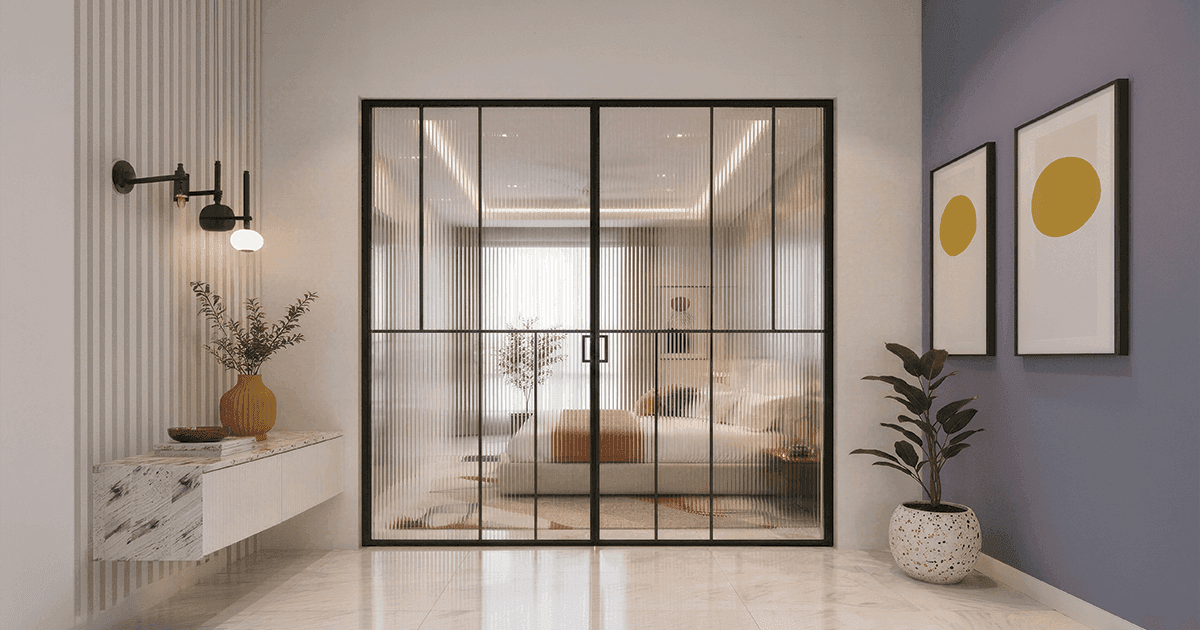
Walk into most modern homes and you will find glass as a common feature in windows, doors and even balcony railings. But have you considered using glass partitions to divide interior spaces? If not, then you are missing out. Glass partitions have become one of the smartest ways to divide spaces without losing the light or openness.
So, if you are weighing the benefits of glass partitions in homes before installing them in your home, here is what all you need to know.
What Are the Benefits of Glass Partitions in Homes?
- Enhanced Natural Light: A wall stops light in its tracks but glass does not. Swap one for a glass partition to allow sunlight moving from room to room.
- Enhances Privacy and Acoustic Performance: You don't necessarily have to choose between privacy and openness with glass. Go for frosted, textured, or tinted panels, and you get the light without anyone seeing straight through. Some glass options also cut down noise between rooms, which matters more than people expect once the partition is actually up.
- Space Optimization: Traditional walls take up real space, thick enough to eat into a room without you noticing until you measure it. Glass partitions mark the same boundary in a fraction of the depth.
- Aesthetic Appeal: Glass walls offer a sleek, contemporary look that can completely change the look of your home.
- Easy Maintenance: Glass does not rot, rust, or attract termites, and a quick wipe with a glass cleaner is usually all it takes to keep the panels looking new.
What Are the Common Residential Applications of Glass Partitions?
Living rooms and dining areas are common places for installing glass partitions, particularly when homeowners want to separate the two zones without losing the open feel. Bedrooms also use them to wall off a dressing area or a small home office corner, which is a very good space-saving interior design idea for apartments that don't have a spare room. Bathrooms use glass shower enclosures, where frosted or textured options keep things private without making the room feel closed in.
What Are the Types of Glass Partitions?
- Synchro Slider: In this type, both panels move together in one smooth, continuous motion. It is suited for wide openings like a living-dining divide.
- Telescopic Slider: A telescopic slider features multiple panels that stack to one side.
- Soft Close Slider: This type of glass partition has a dampened mechanism that stops panels from slamming shut.
- Swing Door: Works like a regular hinged door but in glass, opening inward or outward on a fixed axis.
Ready to Bring the Benefits of Glass Partitions to Your Home?
For decades, Fenesta has helped shape homes through its range of windows and doors. Now, we extend the same commitment to quality to our glass enclosures. Crafted for those who demand more than just functionality, our glass enclosures are factory-manufactured for consistent quality. Every system comes with a 5-year warranty and is backed by a team present across 900+ cities in India.
So, book a free consultation with our design experts and experience firsthand how glass partitions improve your home interiors.
Frequently Asked Questions
Que: What is the lifespan of glass partitions?
Ans: With proper installation and maintenance, glass partitions typically last 15-20 years or more.
Que: Do glass partitions provide privacy?
Ans: Yes, if you choose frosted, textured, or tinted glass instead of clear. These block direct visibility while still letting light through.
Que: Are glass partitions more expensive than walls?
Ans: Yes. Glass partitions can be more expensive in terms of the initial, upfront cost than traditional walls. However, they can offer better long-term value with minimal upkeep.
Que: Why use glass partitions in a bathroom?
Ans: Glass partitions in bathrooms help keep the bathing area watertight and visually open. Plus, if you choose frosted or textured glass, you can get privacy without making the room feel cramped.






Fenesta
India's leading manufacturer of premium uPVC and aluminium windows & doors, helping homeowners create beautiful, comfortable, and energy-efficient spaces.
Leave a Comment