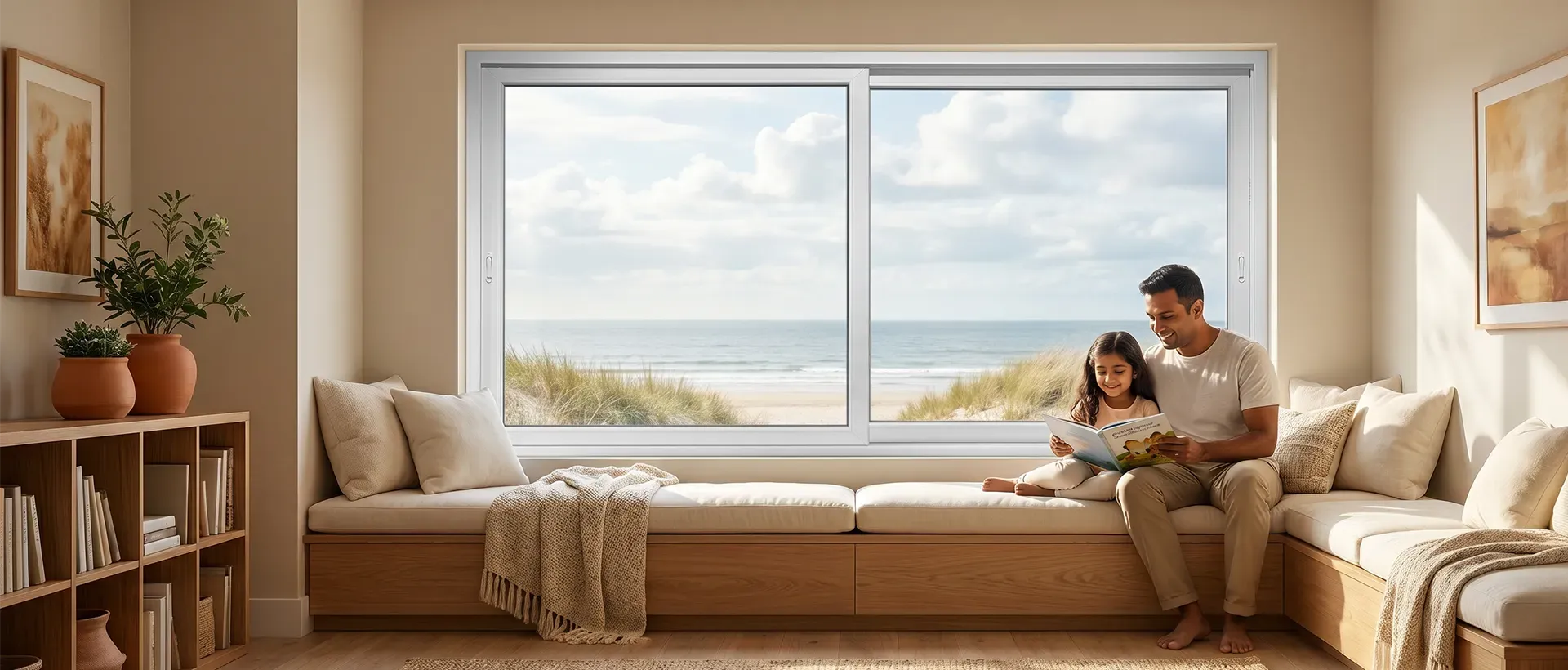
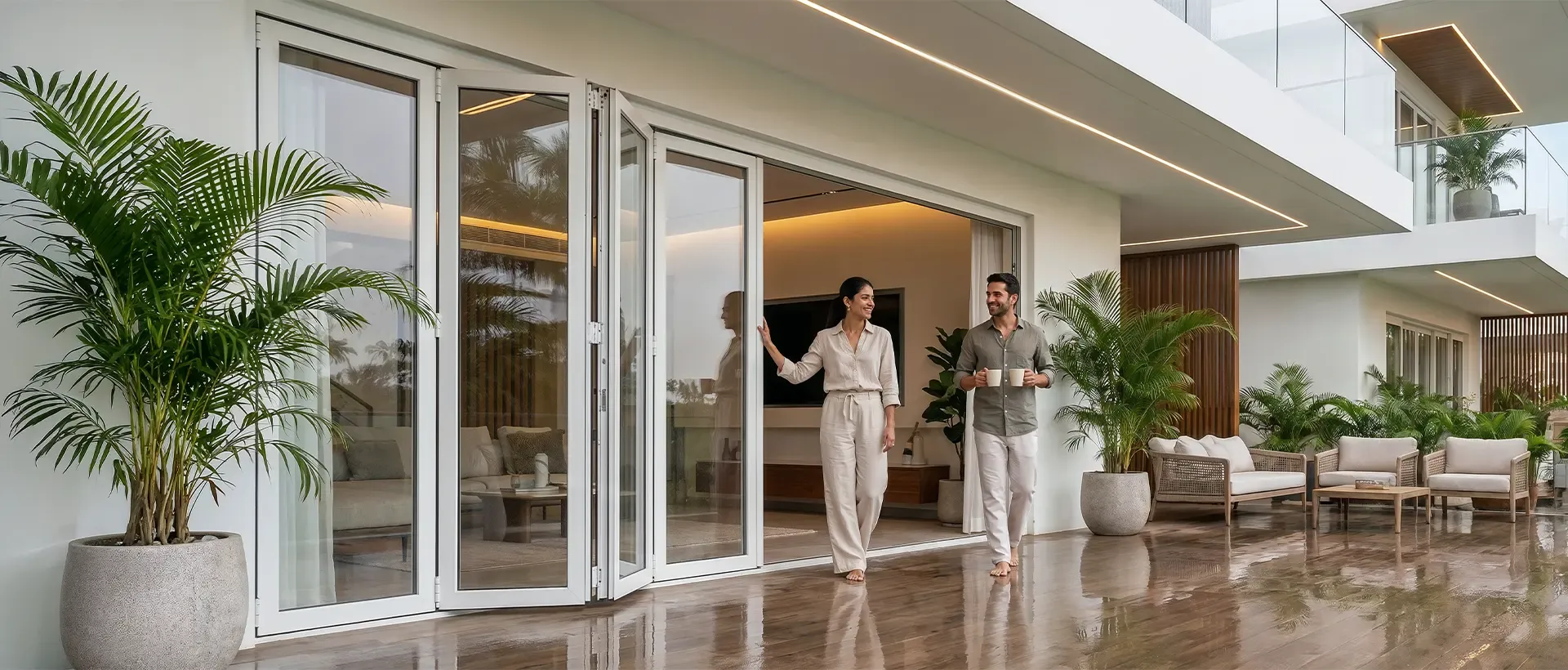
A balcony is one of the most valued spaces in a home — not despite its size, but because of what it connects. It extends the living area outward, frames a view, and creates a threshold between the interior and the open air. The doors and windows that define this threshold are among the most important design decisions in the home.
They need to perform in conditions that interior doors and windows do not face: direct sun, wind, rain, and temperature fluctuation across seasons. They need to open generously, so the connection between inside and outside feels genuine rather than merely visual. And they need to look considered — because the balcony, more than almost any other space, is seen from both sides.
Browse our gallery below for balcony door and window combinations that make the most of the space and the view beyond it.
Explore elegant balcony spaces crafted with modern windows, premium interiors, and natural lighting aesthetics.

Check out our Frequently Asked Questions. If that doesn’t answer your questions about our products, materials, services, installations, and more, please book a consultation with one of our highly trained service representatives or visit us at any of our Signature Studios.
Balcony doors face conditions that interior doors never encounter — direct exposure to sun, wind, and rain, significant temperature variation across seasons, and the mechanical demands of regular use by a door that opens fully to the outside. The material, seal quality, and hardware specification all need to reflect this. Beyond performance, balcony doors shape the relationship between the interior living space and the outdoors. A door that opens wide and frames the view generously makes the connection feel real. One that is narrow, stiff, or visually heavy interrupts it. The proportions, profile, and finish of the door are as important as its technical specification. Visit a Signature Studio or speak with a Fenesta representative to find the right combination for your balcony.
Good balcony door design starts with the view and works inward. The door is a frame as much as it is a threshold — what it reveals when open, and what it shows when closed, determines much of the balcony's character from inside the home.
Proportion matters enormously. A door that is too narrow for the opening feels like a missed opportunity. One that is well-sized for the space makes the interior feel larger, draws the eye outward, and creates the kind of seamless indoor-outdoor connection that a balcony exists to provide. Material, finish, and glazing type should be chosen in relation to the interior palette of the adjoining room as much as to the exterior character of the building.
A modern balcony door design is defined by slim profiles, large glazed panels, and a minimal visual footprint that keeps the focus on the view rather than the frame. The aesthetic is architectural rather than decorative — clean lines, precise detailing, and finishes in neutral or contemporary tones that work with the building's exterior without competing with it. In functional terms, modern balcony doors tend to favour sliding or folding formats that open fully and create a wide, unobstructed connection between inside and outside. The hardware is typically recessed or minimal, and the glazing is specified to manage solar gain and acoustic intrusion without reducing transparency. Browse our gallery for current examples, or visit a Signature Studio to see the range in person.
An aluminium door for a balcony is the strongest material choice for most applications. Aluminium's structural integrity allows for larger openings and slimmer frames than most other materials — which means more glass, a wider view, and a cleaner profile. It is naturally weather-resistant, does not warp or corrode under prolonged exposure to sun and rain, and holds its finish over time without periodic treatment. For a door that will spend its life at the boundary between interior and exterior, aluminium's durability is not just a practical advantage — it is the reason the door continues to look and perform as intended years after installation. Fenesta's aluminium balcony door range covers sliding, casement, and folding configurations in a variety of profiles and powder-coated finishes.
uPVC doors for a balcony are a practical and cost-effective choice, particularly when the balcony is partially covered or sheltered from direct weather exposure. uPVC handles moisture and temperature variations well, requires no maintenance beyond an occasional clean, and insulates effectively — both thermally and acoustically. The frames are available in a range of colours and finishes, including wood-effect options, and can be specified with high-performance glazing to suit the balcony's orientation and exposure. For fully exposed balconies in demanding climates, aluminium offers greater structural resilience. But for many balcony applications, uPVC delivers reliable long-term performance at a lower cost, and Fenesta's uPVC balcony door range is engineered to the same exacting standards as the rest of the product line.
A balcony window design serves a different purpose from windows in most other rooms. Rather than simply admitting light and air to an interior space, a balcony window frames the outside — it is as much about the view as it is about ventilation or insulation. The proportions of the window, the profile of the frame, and the quality of the glass all determine how well it performs this role. At the same time, a balcony window is exposed to the elements in a way that interior windows are not. The specification needs to reflect that — weatherproofing, seal quality, and the durability of the frame finish are all more critical here than in a sheltered interior location. A window that looks good on installation but deteriorates within a few seasons is a poor choice regardless of its initial appearance.
The best balcony windows are those that open generously, seal effectively when closed, and are specified for the conditions they will face. Casement windows that open outward are a strong choice where the balcony is wide enough to accommodate the swing. Sliding windows work well in compact balconies or where the external space is limited. Fixed glazed panels — used in combination with opening sections — can maximise the view while maintaining structural integrity across a large opening. Glass specification is particularly important for balcony windows. Solar control glass manages heat gain in south and west-facing balconies. Acoustic glass reduces noise intrusion in urban settings. Double or triple glazing improves thermal performance and reduces condensation. The right combination depends on the orientation, location, and use of the balcony.
uPVC balcony windows are among the most practical specifications for this application. uPVC handles moisture, temperature fluctuation, and UV exposure without deteriorating — conditions that are a constant reality for any opening that faces the outside directly. The frames require no repainting or retreating, insulate well, and are available in a range of finishes to suit different exterior palettes. For balconies where thermal performance is a priority — retaining warmth in winter and managing solar gain in summer — uPVC's insulating properties give it a meaningful advantage. Fenesta's uPVC balcony window range is available in multiple opening configurations and glass specifications to suit different orientations and exposure levels.
The relationship between the window, door, and balcony as a whole is worth thinking through as a single design decision rather than a series of separate choices. When the door and window share a consistent frame profile, finish, and glass specification, the balcony reads as a coherent opening rather than a collection of individual elements. The transition from inside to outside feels intentional. Practically, the door and window also need to work together in terms of ventilation and light. A balcony where the door opens onto the view and the window can be adjusted independently for airflow gives far more control over the interior conditions of the adjoining room than one where the two openings operate in isolation. Fenesta's range allows for coordinated door and window specifications across both uPVC and aluminium — speak with a representative to explore the available combinations.
The choice maps fairly naturally onto the different demands of doors and windows in this context. Aluminium is the stronger choice for balcony doors — particularly sliding or folding formats that span large openings and take the full force of weather exposure. Its structural strength allows for slimmer frames and larger glazed panels, and its durability under prolonged exterior exposure is unmatched by most other materials. uPVC performs particularly well for balcony windows, where its thermal and acoustic insulation properties, moisture resistance, and low maintenance requirements make it a consistently reliable specification. For balconies where cost-effectiveness is a consideration without compromising on quality, uPVC windows alongside aluminium doors is a pairing that delivers on both fronts. Whichever combination suits your balcony, Fenesta's range covers both materials across a full variety of profiles, finishes, and glass specifications. Visit a Signature Studio or speak with one of our representatives to find the right configuration for your home.