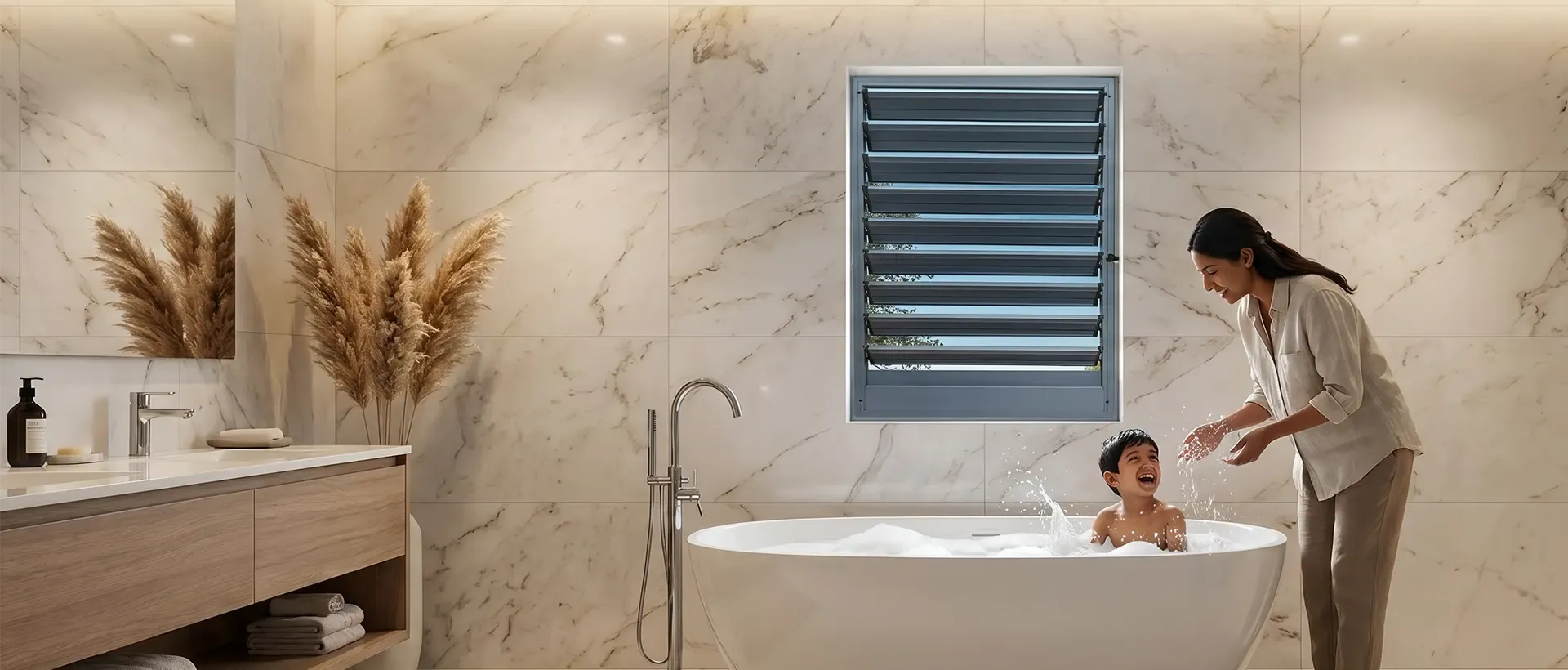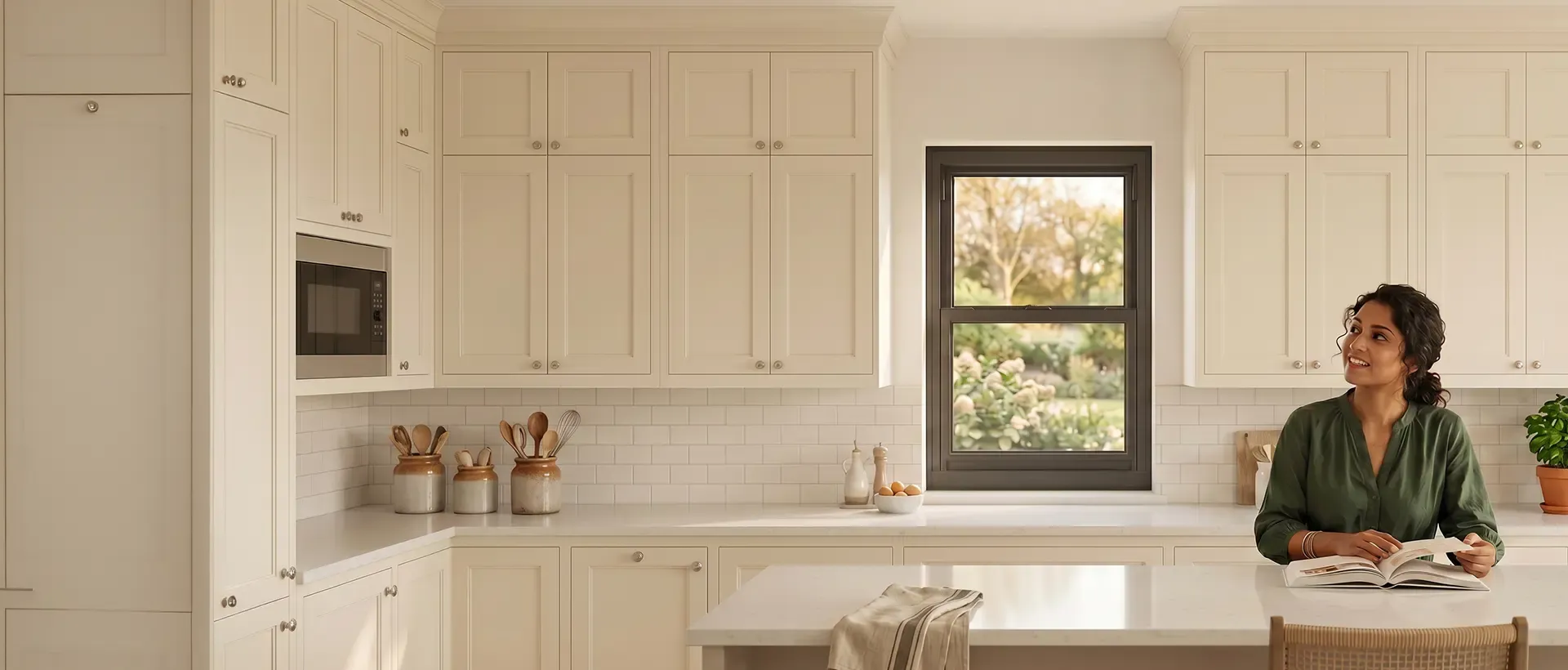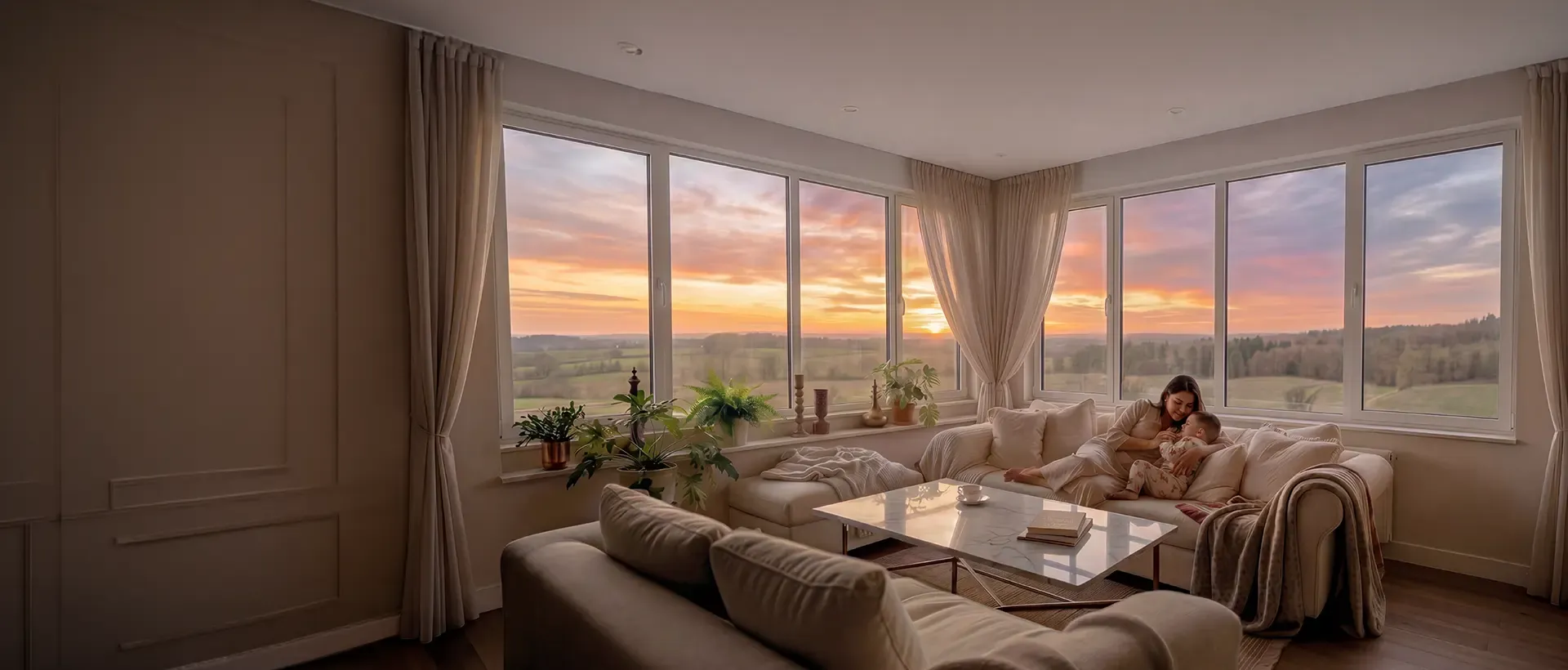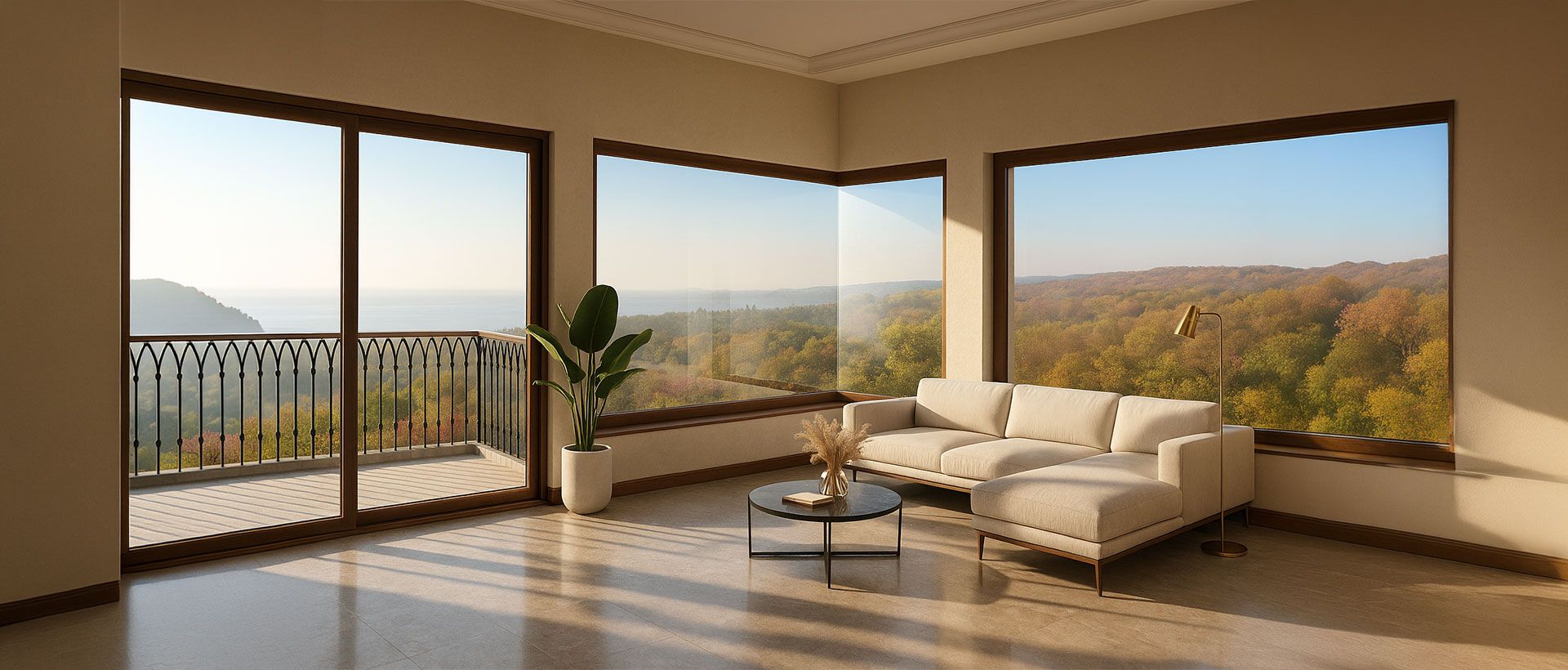
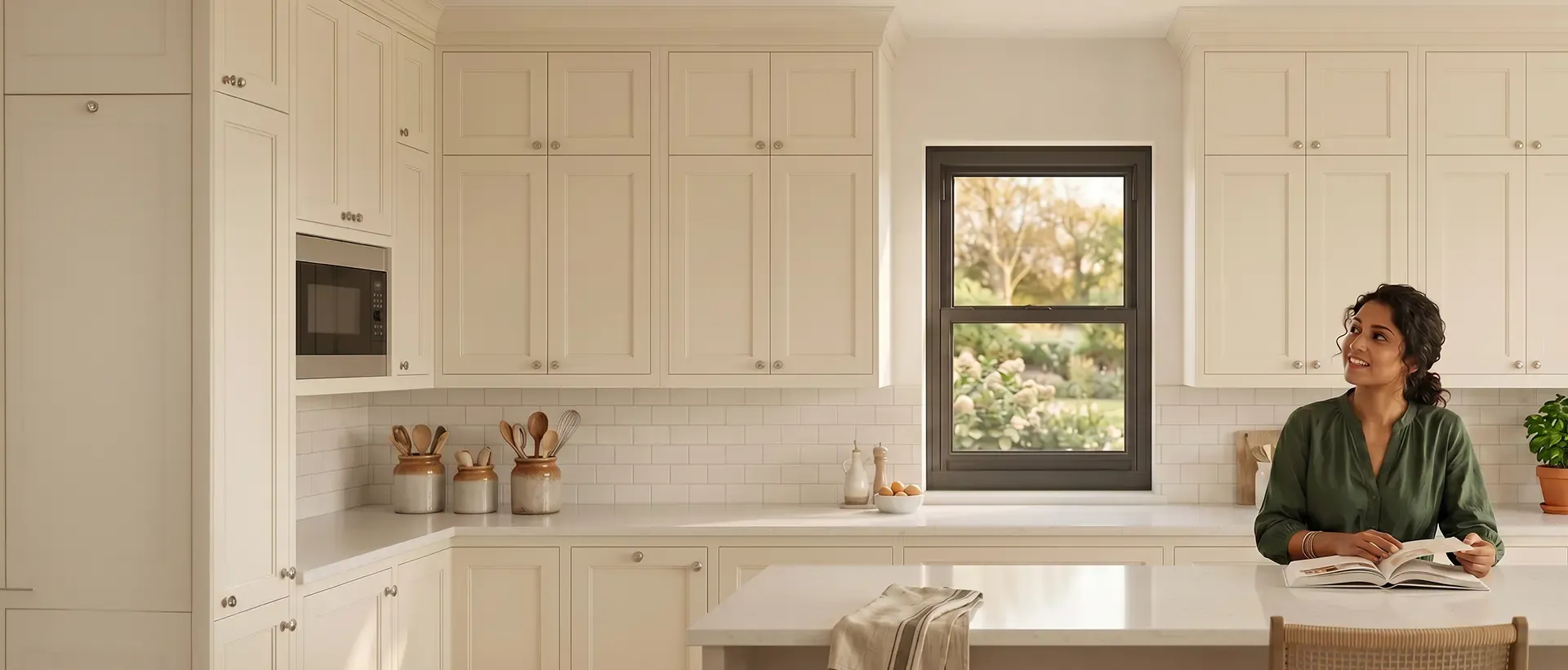
The kitchen is the most active room in the home. It generates heat, moisture, and movement in a way no other room does — and the doors and windows you choose need to be equal to that. Good ventilation is not a comfort preference in a kitchen; it is a functional necessity. Natural light makes the space more pleasant to work in and gives you a clearer view of what you are doing.
At the same time, the kitchen is increasingly a room people want to look good. Open-plan layouts, kitchen-to-garden connections, and the prominence of the kitchen in everyday social life mean that a modern kitchen door design and a considered window arrangement are as much about aesthetics as they are about performance.
Whether you are exploring kitchen door design options or looking for window ideas that balance light, ventilation, and privacy, browse our gallery below to find combinations that work for your home.
Explore elegant kitchen spaces crafted with modern windows, premium interiors, and natural lighting aesthetics.

Check out our Frequently Asked Questions. If that doesn’t answer your questions about our products, materials, services, installations, and more, please book a consultation with one of our highly trained service representatives or visit us at any of our Signature Studios.
A kitchen window design needs to work harder than windows in most other rooms. Ventilation is the primary consideration — cooking generates heat, steam, and odour, and a window that opens wide and allows air to move freely makes the kitchen significantly more comfortable to work in. Natural light is the second priority. A well-lit kitchen reduces eye strain, makes food preparation easier, and gives the space an open, welcoming quality.
The position of the window matters as much as its size. A window above the worktop or sink is a practical classic for good reason — it brings light directly to the work surface while the opening supports ventilation where it is needed most. Glass type, frame finish, and the direction the window faces all influence how the light behaves in the space across the day.
Choosing the right window for a kitchen depends on the room's layout, its orientation, and how the cooking and ventilation needs of the household are balanced. Casement windows are a strong choice — they open fully, support maximum airflow, and are easy to operate with one hand when your other hand is occupied. Slider windows work well where the opening faces a narrow external space such as a side passage.
If the kitchen connects to a dining area or garden, a larger window or a combination of windows can frame that connection and make the indoor and outdoor spaces feel continuous. Visit one of our Signature Studios or speak with a fenestration expert to find the right configuration for your kitchen.
uPVC kitchen windows are particularly well suited to the demands of a cooking environment. The kitchen is a room of fluctuating temperatures and high moisture — conditions that can warp timber frames over time. uPVC is unaffected by steam and condensation, requires no repainting or sealing, and insulates well enough to prevent cold spots near the glass in winter. The frames are available in a wide range of colours and finishes, including wood-effect options, so practicality does not come at the cost of appearance.
The best door ideas for a kitchen take their cue from how the kitchen connects to the rest of the home. A kitchen that opens onto a garden or outdoor dining area calls for a door that frames that connection — large, well-proportioned, and robust enough to handle regular use and exposure to the elements. A kitchen that opens onto a dining room or living area needs a door that manages the transition between spaces without interrupting the flow of the layout.
Think about how the door moves, not just how it looks. In a busy kitchen, a door that swings into the room can conflict with movement and furniture. Sliding formats keep the floor plan clear and are a particularly considered solution in open-plan homes.
The right door for a kitchen balances three things: the practical demands of a high-use space, the architectural character of the home, and the relationship between the kitchen and the spaces it connects to.
Material is an important consideration. A door that opens to the outside — to a terrace, garden, or utility area — needs to be weather-resistant and structurally sound. One that sits between interior spaces can prioritise aesthetics and acoustic separation. The size of the opening, the direction the door faces, and the volume of traffic it handles daily all inform the choice of material, profile, and hardware.
Aluminium kitchen doors are particularly well suited to openings that connect the kitchen to outdoor spaces. Aluminium's structural strength allows for slimmer frames and larger glazed panels than most other materials — which means more light, a wider view, and a cleaner, more contemporary profile. It is naturally weather-resistant, does not warp or corrode, and requires very little maintenance.
For kitchens that open onto a garden, terrace, or outdoor dining area, aluminium doors offer the performance of a material built for exposure alongside the aesthetic of a modern kitchen door design. Fenesta's aluminium door range covers a variety of configurations to suit different openings and layouts.
A modern kitchen door design is defined less by a single style than by a set of principles: clean lines, minimal ornamentation, slim profiles, and a considered relationship between solid and glazed panels. The emphasis is on proportion and material quality rather than decorative detail.
In practical terms, this often means large glass panels that allow light to pass through, flush or near-flush frames that integrate smoothly with contemporary cabinetry, and finishes in neutral or architectural tones. The door becomes part of the room's overall design rather than a standalone feature. Browse our gallery for current examples, or visit a Signature Studio to see the range in person.
In the kitchen, the distinction between the two materials maps fairly naturally onto their different applications.
uPVC is the stronger performer for windows. Its thermal and acoustic insulation properties, combined with its resistance to moisture and its low maintenance requirements, make it an excellent choice for the kitchen environment. uPVC kitchen windows manage condensation well and hold their finish without the upkeep that timber requires.
Aluminium comes into its own for doors, particularly those that open to the outside. Its strength-to-weight ratio allows for larger openings and slimmer profiles, and its natural weather resistance makes it the more durable choice where the frame is exposed to the elements. Together, uPVC windows and aluminium doors give a kitchen both the practical performance it needs and the visual quality a well-designed space deserves.